Algorithms have been instrumental in the addictive nature of social media platforms and apps. Typically, their primary function is to deliver the most engaging content directly to your feed. This often leads to the most viral, most polarizing, and least educational content reaching our screens. Very rarely do the algorithms push content that would improve our lives. What people may not realize is that algorithms can also be used to your benefit, simply by making deliberate choices on what content you choose to watch and how you interact with posts. This article will cover platform specific advice on maintaining a clean, useful social media feed.
To put it simply, an algorithm is just a ruleset that determines what you see on the platform. It doesn't necessarily have to prioritize engagement above all else. It can be tailored by the developers to push whatever behavior they want to incentivize. A good example of this would be the Chinese version of TikTok, called Douyin, which consistently promotes science, technology, engineering, and mathematics related content. Meanwhile, the American version is known for pushing dancing, pranks, and political videos. This disparity was eventually addressed in March, 2023, when TikTok introduced a STEM feed which replicates some aspects of Douyin. Still, it is not the default TikTok experience and only a minority of users watch the STEM feed.
Another interesting distinction between Douyin and TikTok, screen-time is capped at 40 minutes per day for children under the age of 14. They also cannot use the app between 10pm and 6am. Screen time is highly relevant if we want to understand social media algorithms. After all, these algorithms are optimized to increase your time on the platform, not your well-being.
According to Citigroup analysts, ByteDance originally added those screen-time restrictions as a proactive measure to get ahead of regulations from the Chinese Communist Party. For context, this Douyin change came just a few weeks after the CCP limited access to video games for minors to just three hours a week. That seems extremely restrictive, but it raises a question. When one of the world's most controlling governments sees a threat serious enough to intervene at that extreme, it's worth asking how bad this actually is for young people.
By training our algorithms, we can reduce screen time and reshape our feeds into something actually useful. There doesn't need to be a government mandate, you can change your algorithm today. A feed built around science, literature, or history won't just make you smarter over time, it will also be a lot easier on your mental health than the anxiety and outrage the default algorithm serves up.
Know Your Platform
YouTube
Many people assume that subscribing to a channel guarantees they'll see its content. In reality, YouTube's algorithm is built around predicting what you want to watch, not necessarily delivering what you've signed up for. In fact, it is quite common for videos to be completely missing from your subscription feed, even when you're subscribed to the channel.
"Recommendations drive a significant amount of the overall viewership on YouTube, even more than channel subscriptions or search. I've spent over a decade at YouTube building our recommendation system and I'm proud to see how it's become an integral part of everyone's YouTube experience. But all too often, recommendations are seen as a mysterious black box." (Cristos Goodrow, Vice President of Engineering at YouTube)
YouTube can really be broken down into five different systems: the home page, suggested videos, search, subscriptions, and shorts. Each one operates somewhat independently, which means your behavior on one won't always shape what you see on another, but they all draw from the same picture YouTube builds of you over time. Most content interacted with is presented on the home page and the suggested videos column on the right side of the screen, which YouTube calls the Up Next panel.
As of late 2025, the YouTube shorts section is completely detached from the rest of your algorithm. The results from the search feature are not just based on relevance to your query, it is influenced by your personal watch history and how the video performs. This can often be frustrating if you're looking for an obscure video. It has been well documented that the search query consistently promotes mainstream media channels over small creators.
Over time, YouTube shifted the weights from watch time to satisfaction. Satisfaction is determined by several metrics including likes, shares, repeat viewing, and user surveys. Post-watch behavior is also very important. Staying on the platform and watching another video tells YouTube it made a good recommendation. Closing the app tells it something else entirely.
Training Your Algorithm
One of the most impactful ways to clean up your algorithm is by clicking the "Not Interested" and "Don't Recommend Channel" buttons on videos on your home page. By clicking the bell on a channel and enabling notifications, you can ensure that the new videos will enter your subscription feed. Clearing your watch history is a great way to reset that aspect of your algorithm. You can save videos to a playlist or use the Watch Later feature to boost the topic in your algorithm. Most importantly, avoid clicking and watching videos with content that is against your interests.
TikTok
TikTok is known for having a very good algorithm, perhaps too good, and there is a core difference between TikTok and most social media platforms. TikTok's algorithm is based on a profile of your interests, rather than your social network and who you follow, which is more like the algorithms of Instagram, Facebook, and X.
"Defendants know that all it takes to hook an average user is viewing 260 videos. While this may seem substantial, TikTok videos can be as short as 8 seconds, and are played for viewers in rapid-fire succession, automatically. Thus, in under 35 minutes, an average user is likely to become addicted to the platform." (Russell Coleman, Kentucky Attorney General)
This quote comes from the Kentucky Attorney General during a 2024 lawsuit that was part of a coordinated legal effort by 14 states against TikTok, alleging the platform was deliberately designed to addict young people. Coleman is citing data directly from TikTok's own internal research. In other words, TikTok is absolutely aware how addictive their platform is and so should you.
The nature of TikTok's algorithm makes it very difficult to keep a consistent, educational feed. Spend too much time on another topic and it will shift suddenly. The primary influence is watch time and completion rate, how much of the video you watched. The algorithm will sprinkle in new topics occasionally to keep you from leaving. This is to boost your engagement with the app, not to broaden your experience. Unlike YouTube, follower count has much less impact on video distribution. Early engagement can quickly turn a small creator's video viral.
There is a real risk of entering an echo chamber on TikTok. TikTok's internal documents coin it as a "filter bubble", defined as when a user "encounters only information and opinions that conform to and reinforce their own beliefs, caused by algorithms that personalize an individual's online experience." To restate that, the user's perception of reality is no longer their own, it is the algorithm's.
Training Your Algorithm
The longer you spend on the app, the more likely it is that TikTok will inject new topics into your feed. If your goal is to keep your feed related to a beneficial topic, it can help to spend less time on the app. Scroll quickly on videos that are unaligned with your interest. Avoid liking, saving, sharing, reposting, and commenting on unwanted topics. Just like YouTube, TikTok has a "Not Interested" feature accessible from clicking the share button on a video or by doing a long press. Remember to take advantage of the STEM feed.
Content Preferences Features (Location: Settings and privacy > Content preferences)
- 'Filter keywords' - Exclude posts with the requested keyword in the title, description, and stickers
- 'Refresh your For You feed' - Soft reset of your FYP, temporarily shows popular videos like when you first installed the app
- 'Manage topics' - Adjust the weight of the following topics in your algorithm
Instagram's algorithm has changed a lot over time. Originally, it was based solely on your social network. It was later adapted with a content recommendation system. In 2025, Instagram officially retired the word "algorithm" entirely, considering it replaced by multiple AI-powered ranking systems.
"Instagram does not have a single algorithm that oversees what people do and don't see on the app. We use a variety of algorithms, classifiers, and processes, each with its own purpose." (Adam Mosseri, Head of Instagram)
Instagram can be split into Stories, Feed, Explore, and Reels. Each one has its own ranking system, but they are still influenced by the underlying account profile. Stories are provided only by accounts you follow. They are ordered by your closeness to the person: how often you view their stories, like their posts, or directly message the account. On the other hand, posts presented in your Feed come from both accounts you follow and from accounts that the algorithm thinks you'll be interested in. It is largely influenced by the popularity of the post and your own personal likes, saves, shares, and comments. Again, Instagram's algorithm has evolved to prioritize posts outside of your social network.
The Explore page presents posts in a grid that are recommended solely by the algorithm. The content on the Explore page is held to a stricter standard as opposed to Reels or your Feed. Reels are by far the most addictive aspect of Instagram, as it's algorithmically distributed short form content, much like TikTok. The "three second rule" determines whether the Reel is further distributed. If you watch the Reel less than three seconds, it's considered a rejection. Sending a Reel to a friend over direct message sends a strong signal to the algorithm to boost the post's own distribution.
Training the algorithm
First, you can reset your algorithm in the settings (Settings > Content Preferences > Reset Suggested Content). This will give you a fresh start to begin training your new algorithm. In December 2025, Instagram added the "Your Algorithm" feature which allows you to customize your desired content categories. This is available in the top right corner of Reels or the Explore page, as well as in the settings (Settings > Content Preferences > Your Algorithm).
You can favorite specific accounts so that their posts appear higher in your feed. You can also mute accounts, even ones you still want to follow, to see less of their posts. Just like the other platforms, Instagram has a "Not Interested" feature you can use across your Feed, Reels, and Explore page. You can filter direct messages and comments themselves by using the "Hidden Words" feature (Settings and Privacy > Hidden Words > Manage Custom Words and Phrases).
You can use the "snooze suggested posts" feature for your Feed so that you only receive posts from accounts you follow, and none that are suggested to you algorithmically. Simply tap the X of a suggested post in your Feed or access it in the settings (Settings and Privacy > Suggested Content > toggle on 'Snooze suggested posts in feed'). Finally, if you hit the Instagram logo in the top left of your Feed you can sort it by your favorites or accounts you follow.
Facebook is one of the oldest social networks that is still active today. Fundamentally, Facebook has likely had the most experience out of all social networks in managing algorithms and studying their impact on users. In 2021, Karen Hao of the MIT Technology Review interviewed Joaquin Quiñonero Candela, Facebook's Director of Responsible AI. It's an enlightening interview, because it shows the contrast between a journalist who is investigating the harmful impacts algorithms can pose and Joaquin, representing Facebook, trying to steer the conversation towards AI bias.
Near the end of our hour-long interview, he began to emphasize that AI was often unfairly painted as "the culprit." Regardless of whether Facebook used AI or not, he said, people would still spew lies and hate speech, and that content would still spread across the platform. I pressed him one more time. Certainly he couldn't believe that algorithms had done absolutely nothing to change the nature of these issues, I said. "I don't know," he said with a halting stutter. Then he repeated, with more conviction: "That's my honest answer. Honest to God. I don't know." (Karen Hao, MIT Technology Review)
Earlier in the article, Karen Hao covers another Facebook employee who gave a testimony on Facebook's internal research on how algorithms can warp reality for users. They presented a much different side of the story.
"A former Facebook AI researcher who joined in 2018 says he and his team conducted 'study after study' confirming the same basic idea: models that maximize engagement increase polarization. They could easily track how strongly users agreed or disagreed on different issues, what content they liked to engage with, and how their stances changed as a result. Regardless of the issue, the models learned to feed users increasingly extreme viewpoints. 'Over time they measurably become more polarized,' he says." (Karen Hao, MIT Technology Review)
Again, by understanding the algorithm, you can mitigate many of the negative effects the algorithm has on your well-being. Moving on to Facebook's structure, it can broken down into your Feed, Stories, Reels, Groups, and Friends tab. Your feed is half composed of posts algorithmically recommended to you and half posts from your friends, groups, and pages. Stories, much like on Instagram, are only from accounts you follow and are sorted in order by your closeness to the individual, determined by your likes, view history, and direct messages.
Reels appear both in in your feed and in their own dedicated section of the platform. As of mid-2025, all videos uploaded to Facebook are automatically classified as Reels, making them the dominant video format with distribution based on watch time and completion rate. Groups also appear in your feed and their own dedicated section. The dedicated Groups section shows both groups you've joined and ones you haven't that are algorithmically recommended to you. In fact, internal research has shown that 64% of extremist group joins are driven from the recommendation system. The Friends Tab is Facebook's most recent addition, introduced in 2025. It shows only posts, Stories, and Reels from your friends, with no algorithmic recommendations and no advertisements.
Each aspect of Facebook is subject to the same four step algorithm, consisting of Inventory, Signals, Predictions, and Ranking posts by score. Inventory includes the collection process of posts from your friends, groups, and pages you follow. Facebook then uses signals for each of those posts to determine which you would find most interesting. Then, Facebook predicts which posts you would be most likely to engage with. Finally, the posts are ranked by those scores and placed in order.
Training Your Algorithm
You can use the Friends tab to completely bypass algorithmic recommendations. Unlike other platforms, Facebook doesn't have an algorithm reset option in the settings. There is a keyword filter, but it only applies to comments on your own posts. There does exist a "Not Interested" feature accessible through the three-dot menu on posts. You can keep someone as a friend, but still unfollow them so their posts don't appear in your feed.
One of the more useful tools, Favorites, can be used to select specific accounts and pages so that they appear at the top of your feed. The major limitation here is that you can only select up to 30 of them. You can manage your favorites in the settings (Settings & Privacy > Settings > News Feed Preferences > Favorites). Finally, there is a snooze feature accessible in the three-dot menu on a post. It allows you to temporarily mute the posts of the selected person, group, or page for 30 days.
X
X, formerly known as Twitter, has one of the most transparent algorithms of any social media platform. Even before purchasing Twitter, Elon Musk advocated for open-sourcing the algorithm. This is largely because of widespread suspicion that the algorithm was suppressing certain political perspectives. The following quote comes from Elon Musk's Ted Talk in April 2022, just hours after he announced his offer to purchase Twitter.
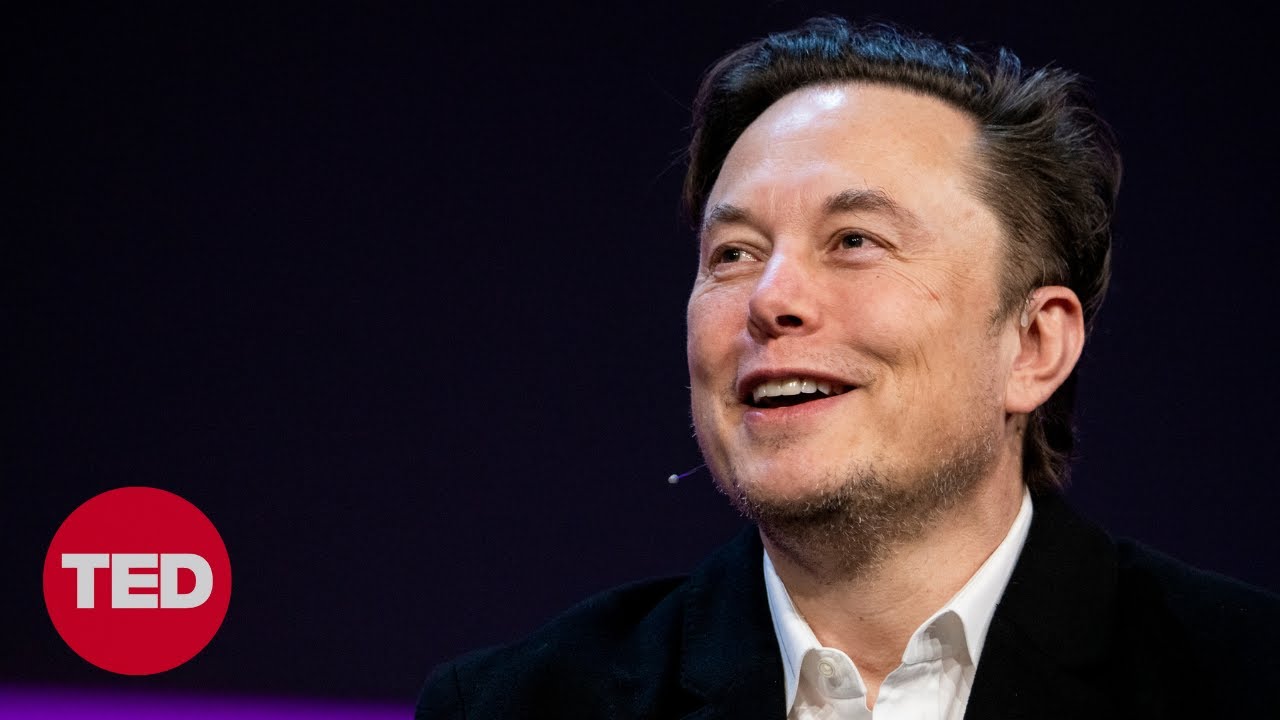
Elon Musk — TED Talk, April 2022
"One of the things that I believe Twitter should do is open-source the algorithm and make any changes to people's tweets, if they're emphasized or de-emphasized, that action should be made apparent so anyone can see that action has been taken. So there's no sort of behind-the-scenes manipulation, either algorithmically or manually." (Elon Musk)
The official algorithm is available on GitHub. Unfortunately as of 2026, the X algorithm uses a Grok-based transformer instead of predefined weights. In other words, we can still understand the architecture, but the exact engagement weights now exist in a black box. The following data comes from the 2023 release, with each weight expressed as a ratio relative to a like.
It's a fair assumption that the 2023 weights still reflect the algorithm's priorities. On May 15, 2026, Elon Musk announced the latest version of the algorithm had been published to GitHub. Before covering what has been found in that release, we will break down X as a platform.
The For You feed presents posts recommended by the algorithm, both from accounts you follow and don't. While your Following feed is only from accounts you follow, it is no longer chronological. As of November 2025, it is also based on a Grok recommendation system, prioritizing posts you're more likely to engage with. Trending topics on the explore page are based on the quantity of posts on the topic, the speed at which they are increasing, and your geographic location.
The latest release of the algorithm has revealed several interesting changes. First, there exists a "slop score". Its primary purpose is to reduce the distribution of low quality and AI-generated content. Additionally, accounts that repeat content, such as posting multiple times in a short period of time, get penalized. Posts that contain violence, gore, and NSFW content are penalized. Advertiser friendly content is also tagged differently.
Training Your Algorithm
With the assumption that the 2023 weights are still somewhat relevant, likes matter far less than other forms of interaction. In fact, X's "Not Interested" feature carries about 150 times the weight of a like in the opposite direction. Blocks and mutes carry a similar weight. Profile clicks surprisingly do have an impact on your algorithm, so be careful not to snoop on profiles with content that is against your interest. Even pausing your scroll on a post will influence your algorithm.
Unlike other platforms, there is no reset mechanism in the settings, but you can actually ask Grok to change your algorithm for you. For example, you could prompt Grok with "show me less politics" or "show me more posts about physics" and it will adjust your profile accordingly. This puts the trainability of the X algorithm on a whole other level compared to other social media platforms. Another powerful tool is X Lists. It allows you to create a custom group of accounts and use that group as an independent feed. It can also be pinned to the top of your homepage.
There is a "Muted Words" feature in the settings that allows you to filter posts that include your selected keywords (Settings > Privacy and Safety > Muted Words). Finally, you can always use your Following feed instead of the For You feed for a more curated selection of posts.
Moving Forward
By taking these deliberate steps across platforms, you shift from being a passive consumer of whatever the algorithm serves to an active trainer of your own digital environment. The default algorithm leads to more outrage, distraction, and wasted time. The intentional path leads to feeds filled with science, literature, history, or whatever enriches your life.